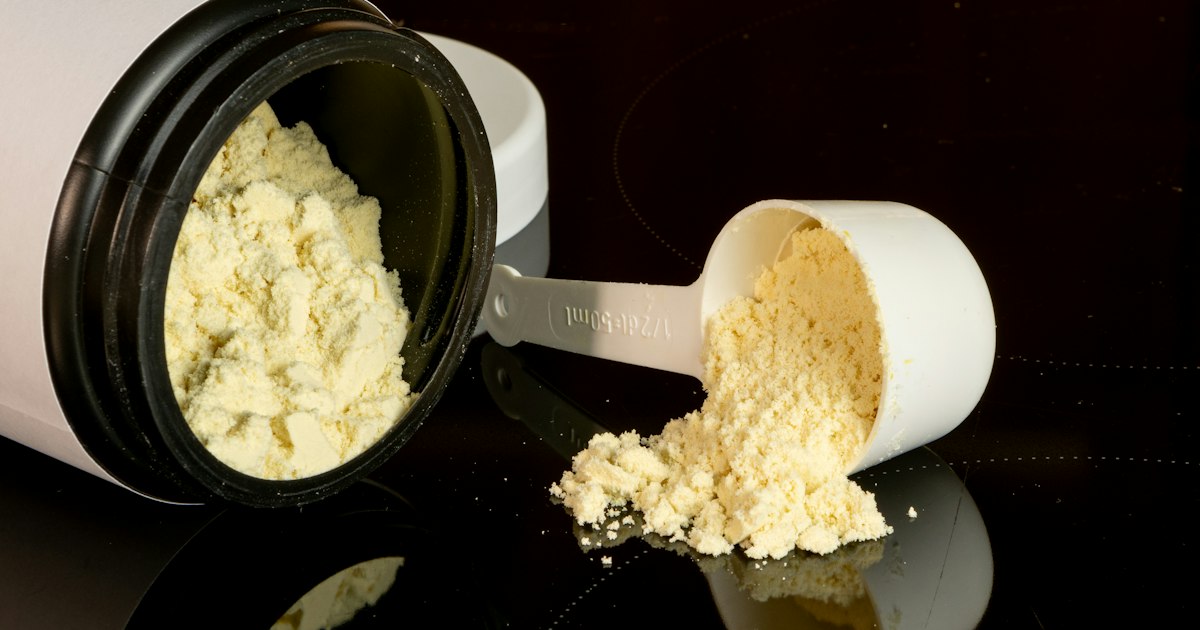

Testosterone enanthate appeared on the pharmaceutical market more than seventy years ago, and during this time it went from a scientific novelty to a standard means of replacement therapy and at the same time one of the most famous doping substances. The editors traced how the discovery of the hormone, the search for long-lasting forms and the development of endocrinology shaped the modern perception of this drug.
Background: from organotherapy to hormones
People have known about the connection of testicles with male characteristics since ancient times — this was confirmed by the practice of castration of animals and people. However, scientific study began only in the 19th century. In 1849, the German physiologist Arnold Berthold showed that transplanting the testicles of castrated roosters restores the crest and behavior characteristic of males. It was one of the first experiments to indicate the existence of substances acting through the blood.
In 1889, the French physiologist Charles-Edouard Braun-Sécard, who was 72 years old at the time, reported that he injected himself with extracts of animal testicles and felt a surge of strength and vigor. From the point of view of modern science, the effect was probably a placebo, because the aqueous extract contained a small amount of the hormone. However, his report caused a wave of "organotherapy" and interest in rejuvenation.
At the beginning of the 20th century, dubious methods such as tissue transplants of animal testicles into humans appeared, which were advertised as a means of rejuvenation. They had no scientific basis, but drew public attention to the problem and stimulated research funding.
Modern endocrinology was being formed in parallel. In 1905, Ernest Starling coined the term "hormone," and in the 1920s, scientists learned to isolate the first steroid hormones. The path to testosterone lay through the study of urine and animal tissues, from which it was possible to obtain microgram quantities of active substances.
1935: discovery and synthesis of testosterone
1935 became a key year. Ernst Lacker's group in Amsterdam, working with the pharmaceutical company Organon, isolated a crystalline hormone from bovine testicles and called it "testosterone." Almost simultaneously, two other groups—Adolf Butenandt in Germany and Leopold Ruzychka in Switzerland—reported the chemical synthesis of testosterone from cholesterol.
The discovery was of great importance: for the first time, it became possible to obtain male hormone in quantities sufficient for clinical research, and not to depend on animal raw materials. In 1939, Butenandt and Ruzychka received the Nobel Prize in Chemistry for their work with sex hormones; Butenandt was forced to give it up due to the ban of the Nazi regime and received it after the war.
However, it soon became clear that free testosterone is not suitable for treatment. When taken orally, it is almost completely destroyed in the liver, and after injection it is excreted very quickly. Pharmacologists began to look for ways to prolong its effect.
The first successful solution was testosterone propionate, a short-chain ester introduced into clinical practice in the late 1930s. It worked longer than the free hormone, but still required injections several times a week, which was inconvenient for long-term therapy.

The birth of esters and the appearance of enanthate
In the 1940s and 1950s, chemists systematically investigated steroid hormone esters with different carbon chain lengths. The regularity quickly became obvious: the longer and more lipophilic ester, the slower the drug is released from the oil depot and the longer it works. The works of the German pharmacologist Carl Junkmann from the Schering company made a significant contribution to the study of such prolonged esters.
Testosterone enanthate, an ester with seven carbon heptanoic acid, appeared in clinical practice in the 1950s. In the USA, it began to be released under the trade name Delatestryl, in Europe under the name Testoviron Depot and others. Almost at the same time, testosterone cypionate, similar in properties, became widespread in the USA.
Enanthate became a compromise between duration of action and controllability. It allowed for injections once every 2-3 weeks, which was a significant step forward compared to propionate at the time. Subsequently, pharmacokinetic studies showed that such intervals produce noticeable fluctuations in the hormone level, but there were no alternatives for a long time.
| Period | Pharmaceutical form | Significance |
|---|---|---|
| Late 1930s | Testosterone propionate | First clinically applicable ester, frequent injections |
| 1950s | Testosterone enanthate, cypionate | Injections 1-3 weeks apart |
| 1970s | Oral testosterone undecanoate | Absorption through the lymphatic system |
| 1990s | Transdermal patches and gels | More stable daily profile |
| 2000s | Injectable testosterone undecanoate | Injections once every 10–14 weeks |
Despite the appearance of new forms, enanthate has not disappeared from the market. It remains an available, inexpensive and well-studied drug that is included in the drug lists in many countries. In the monograph of Nieschlag and Behre, it is described as one of the most widely used injectable esters in world practice.
Medical application: from hypogonadism to contraception
The main indication for testosterone enanthate from the beginning has been male hypogonadism, a condition in which the testicles do not produce enough of the hormone due to damage to themselves or due to dysregulation by the pituitary gland or hypothalamus. The drug was also used to induce puberty in adolescents with delayed puberty.
For a long time, testosterone was also used in other situations - in some anemias, for the treatment of certain forms of breast cancer in women, and in cases of exhaustion. With the advent of more effective treatment methods, most of these indications have lost their relevance.
Research on male hormonal contraception occupies a special place in the history of enanthate. In 1990, the Lancet published the results of a multicenter WHO study in which weekly injections of enanthate induced azoospermia in most healthy men. The concept turned out to be effective, but the frequency of injections and side effects prevented it from becoming a mass method.
At the end of the 20th and the beginning of the 21st century, testosterone entered the masculinizing hormone therapy of transgender men. At the same time, the number of appointments to older men increased, which sparked a discussion about safety. The 2018 Endocrine Society clinical guidelines and the 2023 TRAVERSE trial were important milestones in determining who and how to prescribe testosterone.
Sports, doping and regulation
Almost immediately after the appearance of synthetic testosterone, attempts to use it to improve performance began. Kanayama and Pope (2018) in their review describe how anabolic steroids have spread since the 1950s, first among professional athletes in strength sports, and since the 1980s among non-competitive fitness enthusiasts.
The International Olympic Committee banned anabolic steroids in the mid-1970s, but testosterone has long been difficult to detect because it is identical to its own hormone. The solution was the measurement of the ratio of testosterone to epitestosterone (T/E) in urine, introduced in the early 1980s. Subsequently, methods of isotope mass spectrometry, which distinguish between synthetic and own testosterone, appeared.
One of the darkest episodes was the state doping program of the GDR, described in detail by Franke and Berendonk (1997). Athletes, particularly minors, were systematically given androgens, often without their consent, which led to serious health consequences for many of them.
In 1999, the World Anti-Doping Agency (WADA) was established. Today, testosterone and all its esters are included in the S1 class "Anabolic agents" of the WADA Prohibited List and are prohibited both in and out of competition. The steroid module of the athlete's biological passport is used for detection, which monitors individual changes in indicators over time.
- 1950s: proliferation of anabolic steroids in strength sports.
- Mid-1970s: IOC ban on anabolic steroids.
- Early 1980s: T/E ratio test.
- 1999: Creation of WADA.
- 2010s: steroid module of the athlete's biological passport.
Editorial conclusions
The story of testosterone enanthate is the story of the search for a convenient and stable form of the natural hormone. About a hundred years passed from the experiments of Berthold and Braun-Secard to the synthesis of testosterone in 1935 and the appearance of prolonged esters in the 1950s.
Enanthate has become one of the most widely used injectable testosterone drugs due to its combination of moderately long duration of action, availability, and well-studied pharmacology. He played an important role in the treatment of hypogonadism and in research on male contraception.
At the same time, the same substance has become a symbol of doping in sports, and its non-medical use is the subject of anti-doping control and research on health hazards. Modern medicine uses testosterone much more carefully than in the middle of the 20th century.
To learn more, read our articles on what testosterone enanthate is and how it works, its pharmacokinetics, and the risks of virilization in women.
List of used literature
- Nieschlag E, Nieschlag S. Endocrine history: the history of discovery, synthesis and development of testosterone for clinical use. Eur J Endocrinol. 2019;180(6):R201âR212.
- Freeman ER, Bloom DA, McGuire EJ. A brief history of testosterone. J Urol. 2001;165(2):371â373.
- Hoberman JM, Yesalis CE. The history of synthetic testosterone. Sci Am. 1995;272(2).
- Kanayama G, Pope HG Jr. History and epidemiology of anabolic androgens in athletes and non-athletes. Mol Cell Endocrinol. 2018;464:4â13.
- Franke WW, Berendonk B. Hormonal doping and androgenization of athletes: a secret program of the German Democratic Republic government. Clin Chem. 1997;43(7):1262â1279.
- World Health Organization Task Force on Methods for the Regulation of Male Fertility. Contraceptive efficacy of testosterone-induced azoospermia in normal men. Lancet. 1990;336(8721):955â959.
- Nieschlag E, Behre HM, Nieschlag S (eds). Testosterone: Action, Deficiency, Substitution. 4th ed. Cambridge University Press; 2012.
- World Anti-Doping Agency. Prohibited List. Montreal: WADA; акÑÑалÑна ÑедакÑÑÑ.